SafeFood — Personal Allergy Scanner App
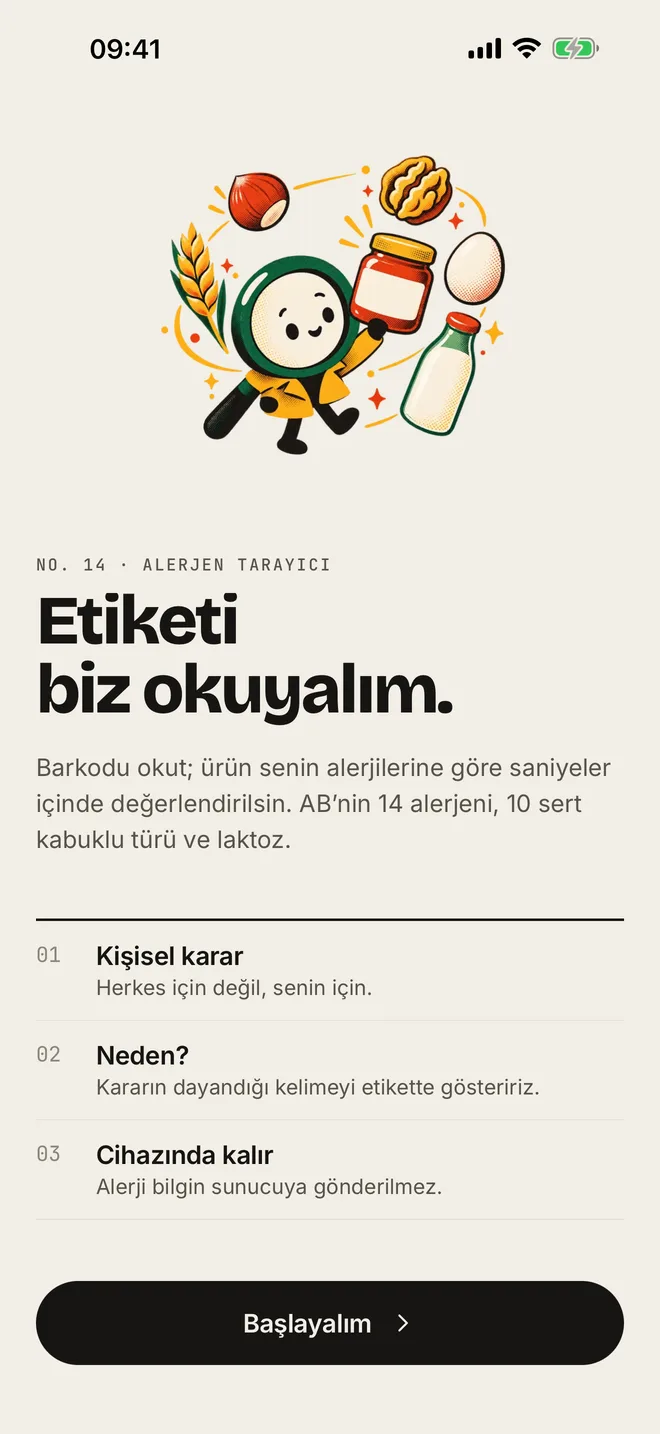
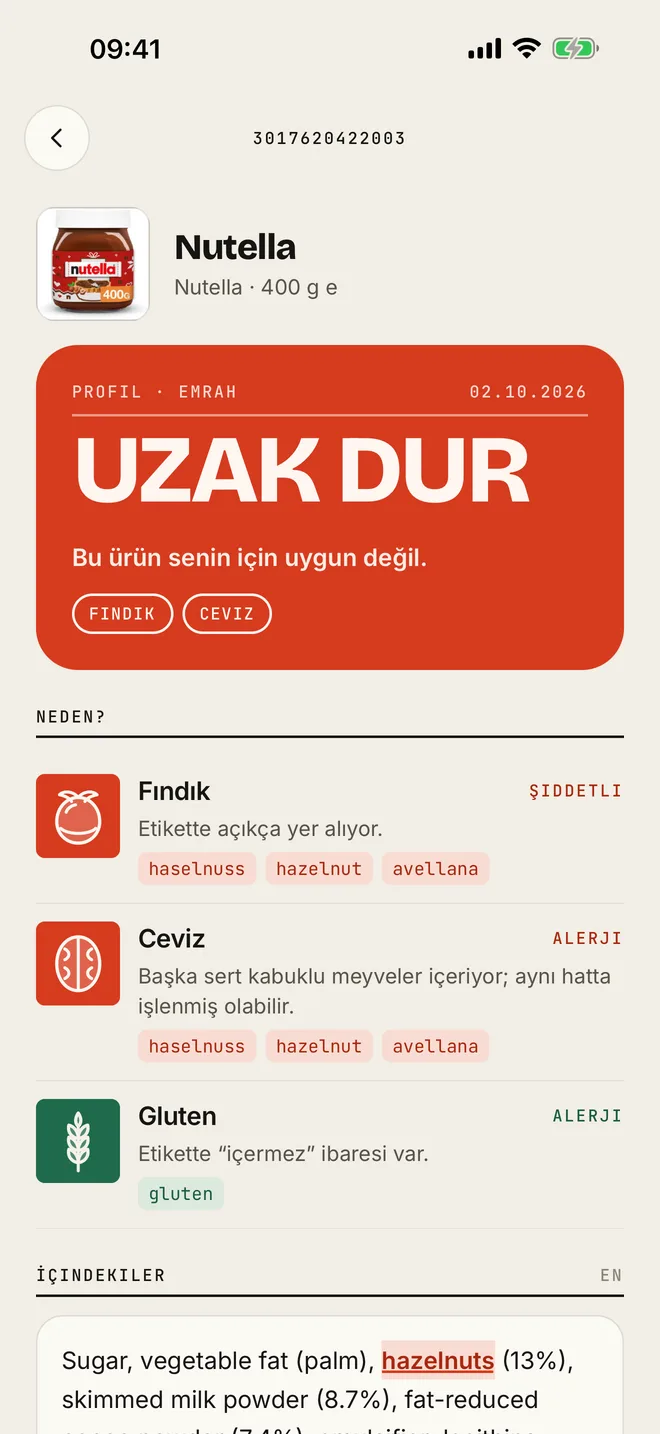
A mobile app that checks a scanned product against the user's own allergies and highlights the word on the label behind the verdict. The allergy profile never leaves the phone.
Projects about
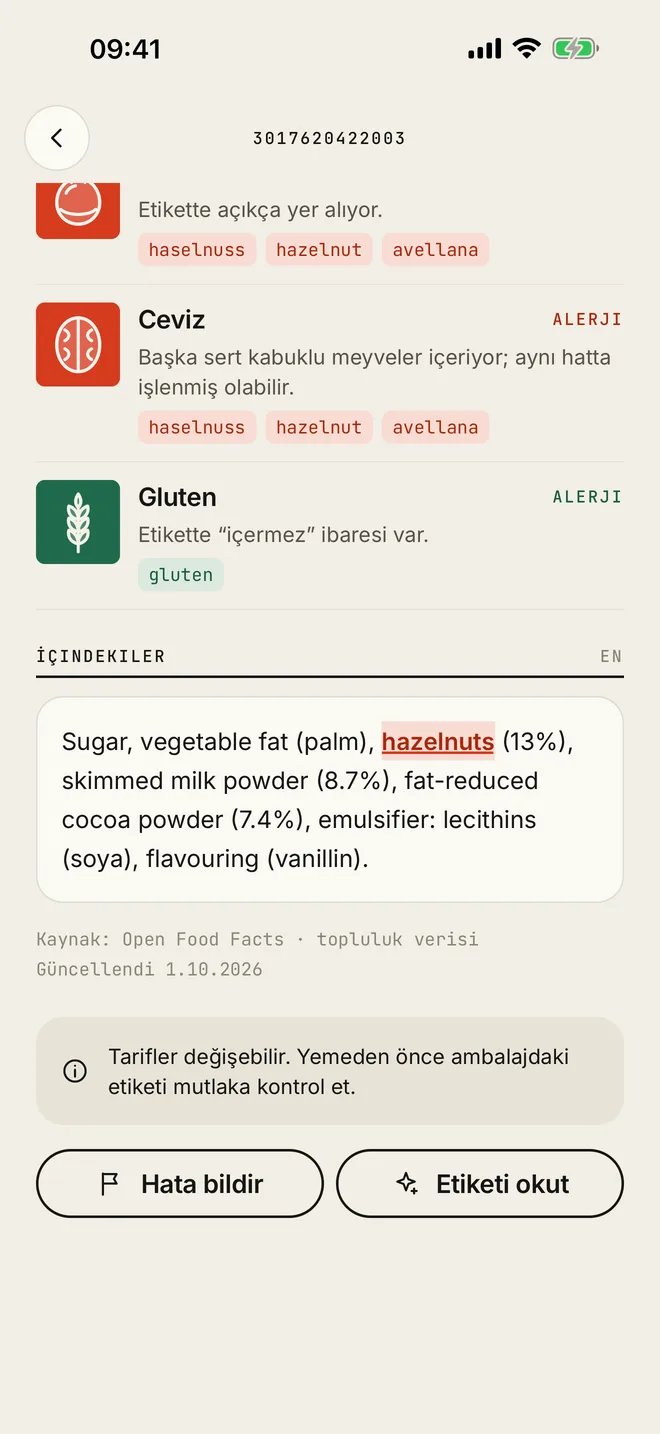
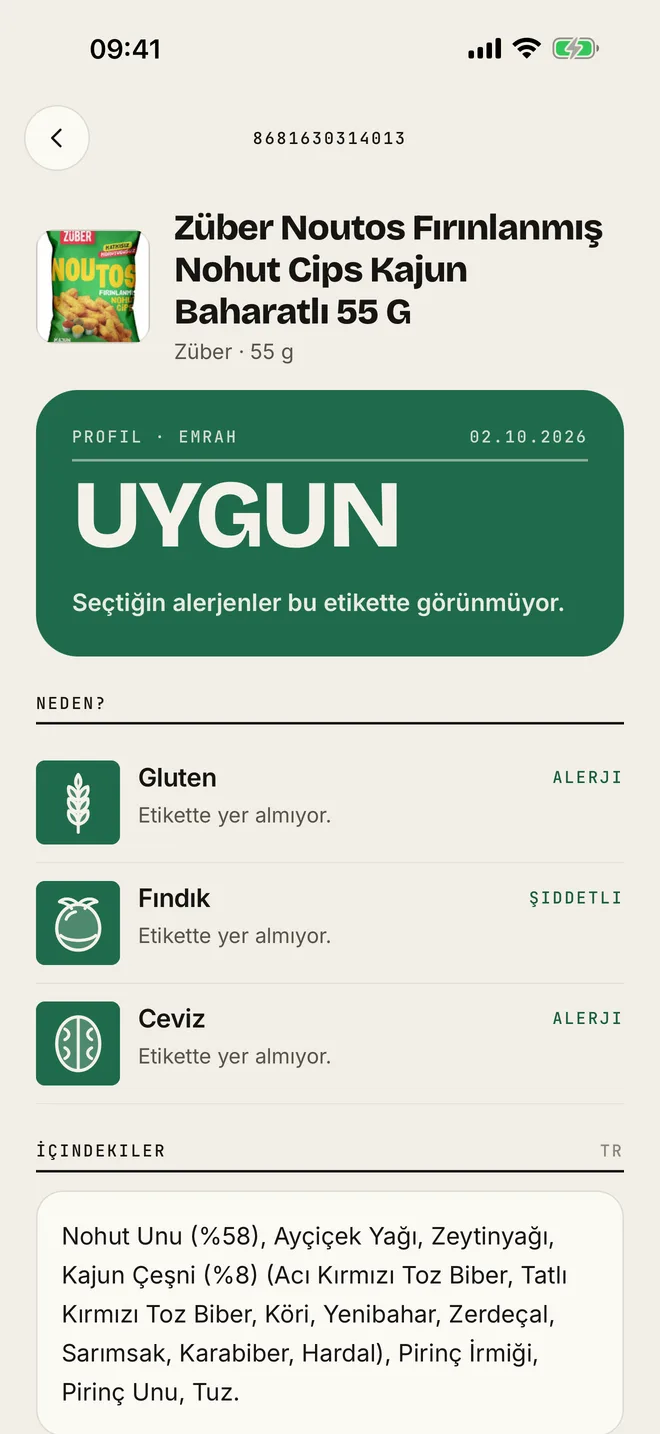
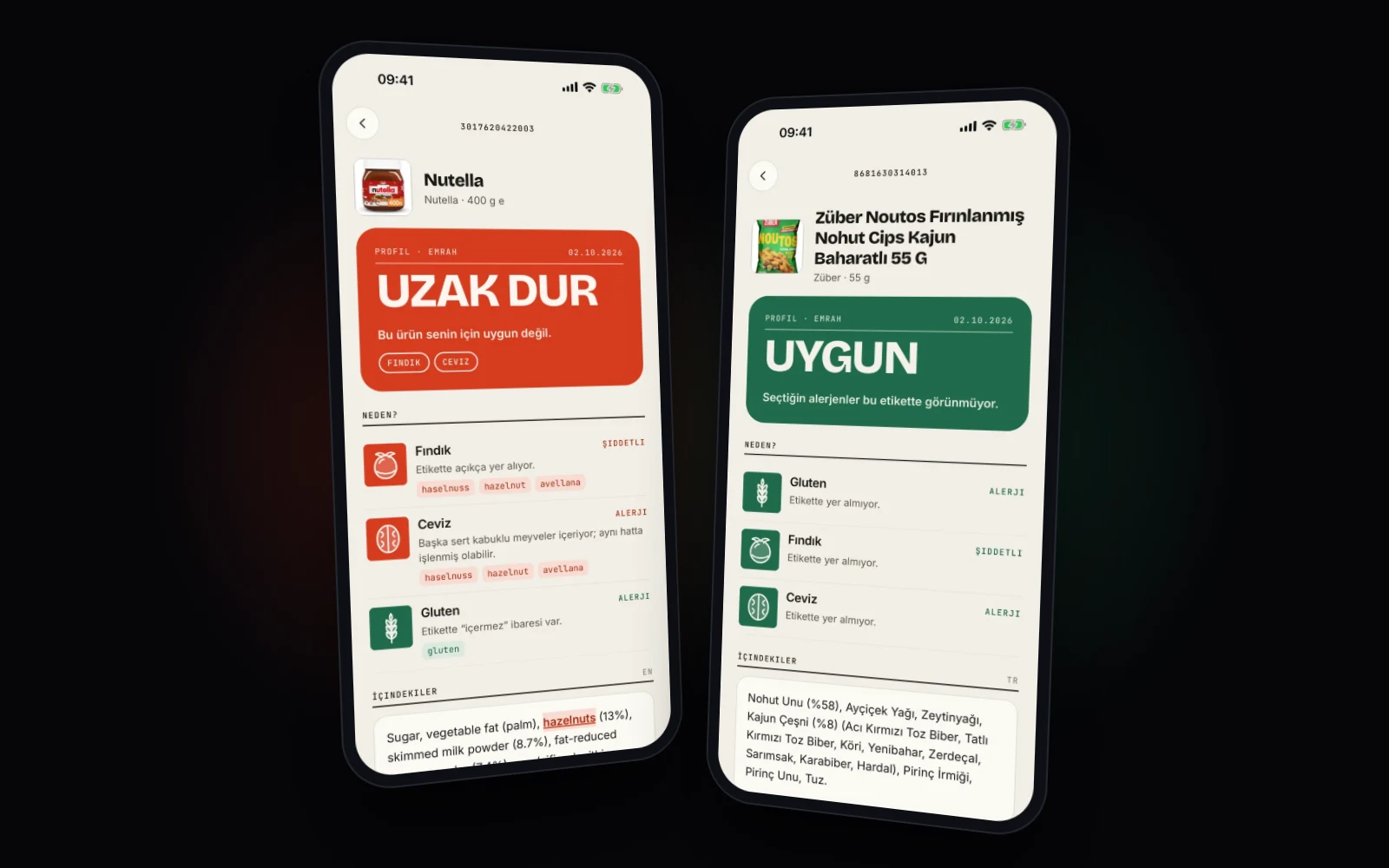
For someone living with a food allergy, grocery shopping means reading every label line by line. SafeFood takes over that job: the ingredients of a scanned product are checked against the allergies and severity the user picked, the result comes back as Clear, Caution or Avoid, and the word behind the verdict is highlighted on the label. The first version was a family of separate apps, one per allergen; in the new version we brought them all into a single app that works from a personal profile.
A personal verdict
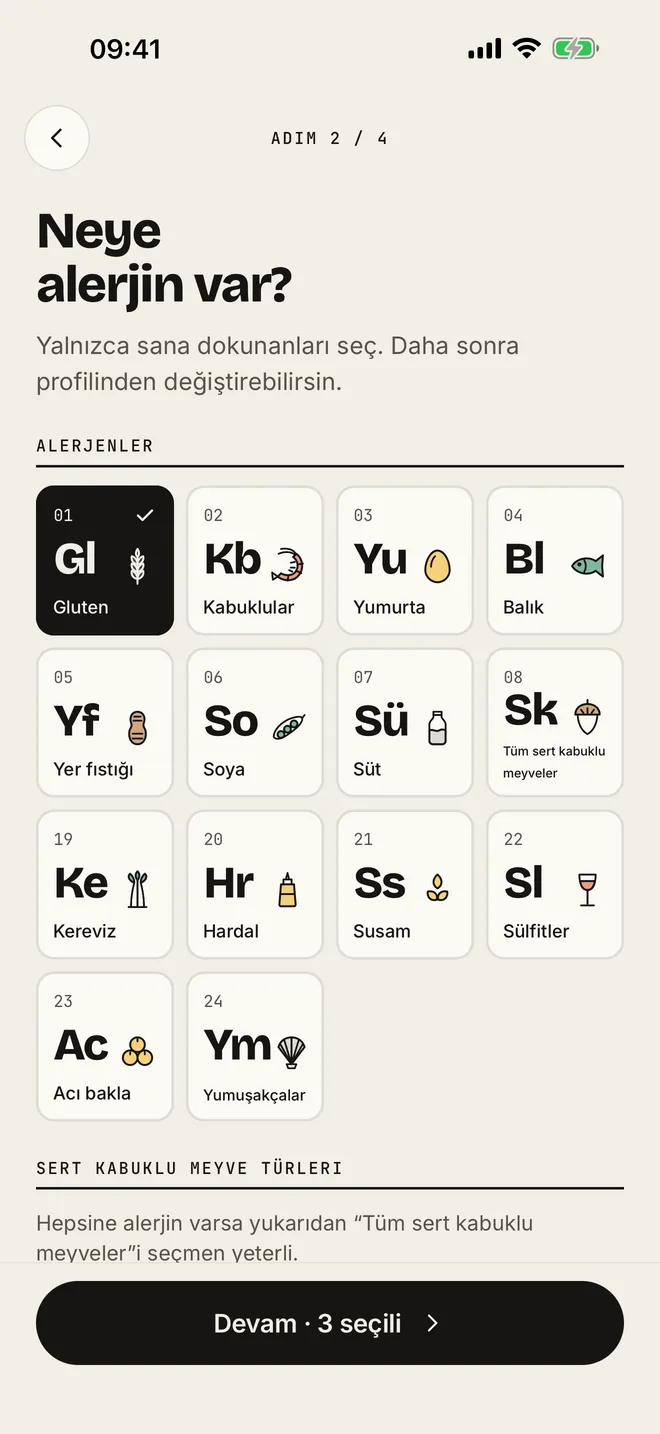
- The EU's 14 allergens, 10 tree nuts tracked one by one (hazelnut and walnut included) and lactose
- The verdict is made for the allergies and severity the user chose, not for everyone; "may contain traces" warnings count too
- The reason and the evidence are shown; when data is missing the app honestly says Unknown
Privacy
- The decision engine runs on the phone; a guest user's allergy profile and scan history are not sent to the server
- Family profiles: separate profiles for a child, partner or parent, switched with one tap
Beyond the supermarket
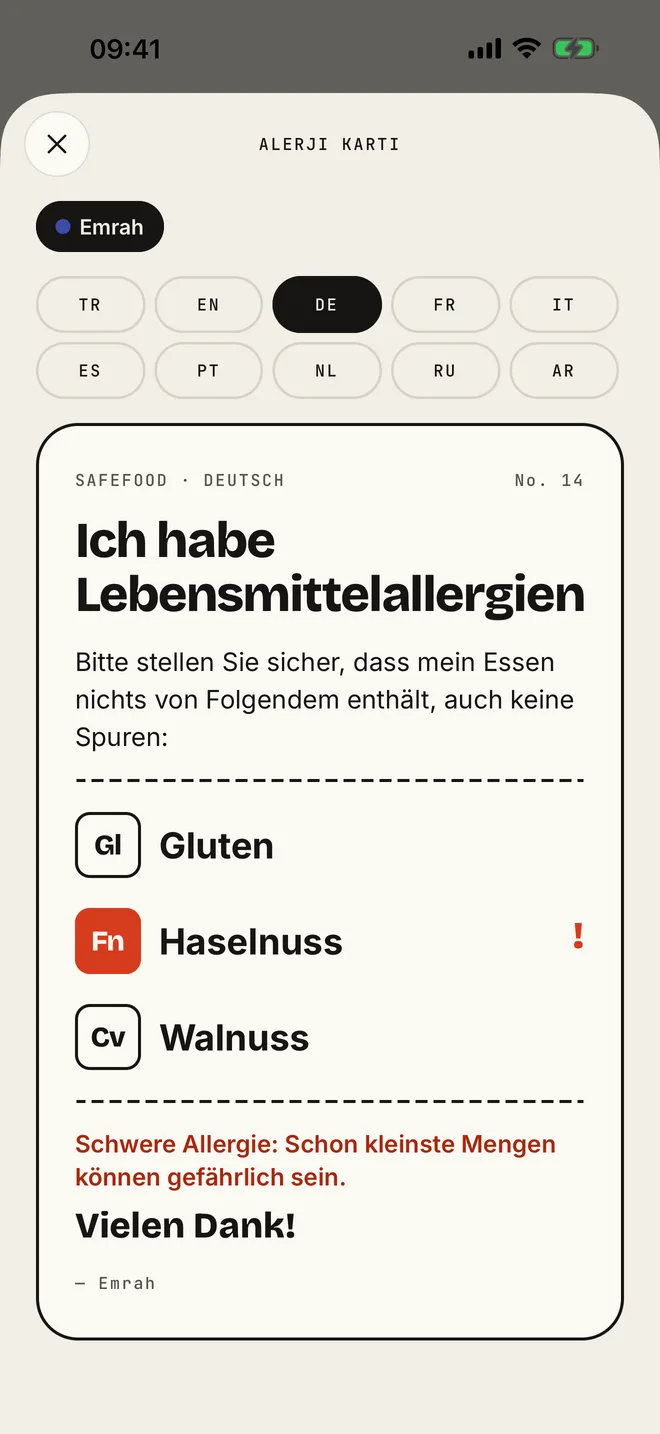
- An allergy card in 10 languages to show a waiter at a restaurant or abroad
- Official allergen-related recalls filtered by the user's allergies
Business model
Barcode scanning, personal verdicts, family profiles, the allergy card and alerts are free and unlimited. For products without a barcode the label is read by AI; because each read has a cost, 3 reads a month are free and more come with credit packs or monthly plans. Users who add a new product for the community receive credits.
Status
The app is being prepared for the App Store with the UK as its first market; store listings are in 12 languages, the interface in 10. Data comes from manufacturers, the Open Food Facts community and scanned labels; SafeFood is a decision aid, not medical advice.
Technology
Screen captures